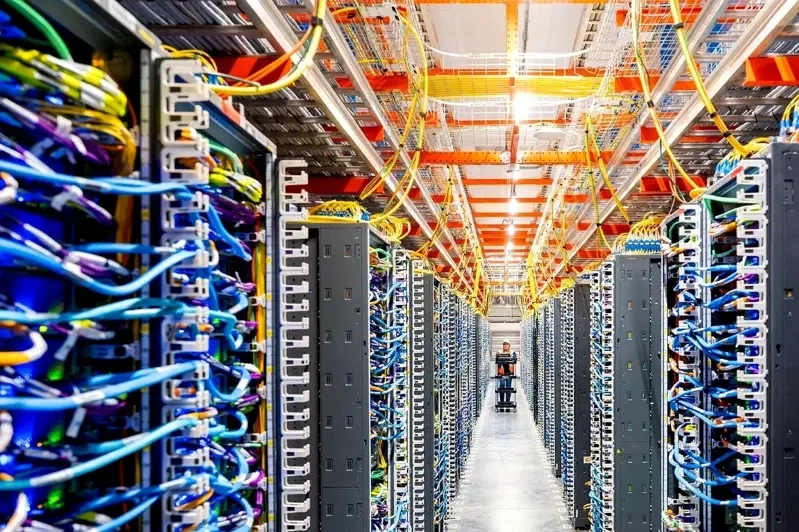
A backlash against AI data centers is sweeping across the U.S., turning the issue into a hot-button topic ahead of the 2026 midterm elections. According to CNBC, the U.S. House of Representatives is set to vote—possibly as early as Tuesday evening—on a bipartisan bill aimed at addressing the most immediate public grievance: ensuring that ordinary households do not foot the bill for the massive electricity demands of tech giants.
The bipartisan “Ratepayer Protection Act” targets AI data centers with power demands exceeding 100 megawatts. It requires operators to personally cover the costs of new power generation facilities, transmission lines, and other electrical infrastructure necessitated by their operations, thereby preventing these expenses from being passed on to everyday consumers through their utility bills.
AI data centers are sparking a backlash across the U.S., becoming a contentious issue ahead of the 2026 midterm elections. CNBC reports that the U.S. House of Representatives could vote as early as Tuesday evening on a bipartisan bill designed to address the most immediate public grievance: ensuring that ordinary households do not foot the bill for the massive electricity demands of tech giants.
The bipartisan “Ratepayer Protection Act” targets AI data centers with power demands exceeding 100 megawatts (MW). It requires operators to cover the costs of new power generation facilities, transmission lines, and other electrical infrastructure necessitated by their operations, thereby preventing these expenses from being passed on to average consumers through utility bills.
The bill’s sponsor, Republican Representative Gabe Evans of Colorado, stated that the principle is simple: whoever creates the new demand should bear the cost of meeting it.
Co-sponsor Representative Kathy Castor, a Florida Democrat, added that the public—already facing soaring electricity bills—should not be subsidizing the escalating energy needs of wealthy corporations.
However, this proposed solution has limitations. The bill merely establishes a set of protective guidelines that states can choose whether or not to adopt; the planning and approval processes for individual data centers remain primarily under the jurisdiction of state and local governments.
The environmental group League of Conservation Voters criticized the bill for lacking enforcement power, noting that state regulators could ultimately choose to ignore it.
House Democratic Leader Hakeem Jeffries supports the bill, describing it as a step forward while acknowledging that further action is still needed.